
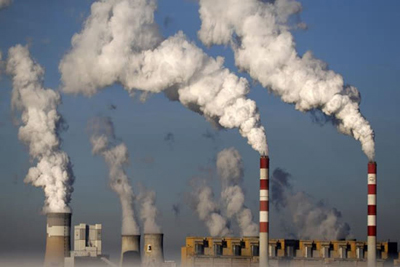
This standard stipulates the limits, monitoring and monitoring requirements for the emission of atmospheric pollutants from thermal power plants, as well as the implementation and supervision of standards.
This standard is applicable to the management of atmospheric pollutants in existing thermal power plants, as well as the environmental impact assessment of thermal power plant construction projects, the design of environmental protection projects, the acceptance of environmental protection after completion, and the management of atmospheric pollutants after commissioning.
This standard is applicable to coal-fired power generation boilers with a single output of 65t/h or more, except for layer burners and coal shovel furnaces; coal-fired power generation boilers of various capacities; single-output 65t/h fuel oil and gas-fired power generation boilers; A thermal power plant with gas turbines of various capacities; a power generation boiler with a coal output of more than 65t/h using coal gangue, biomass, oil shale, petroleum coke, etc. The gas turbine unit of integrated gasification combined cycle power generation implements the gas turbine emission limit of natural gas burning in this standard.
This standard does not apply to thermal power plants with domestic waste and hazardous waste as fuel.
This standard applies to the discharge of pollutants permitted by law. The location of newly established pollution sources and the management of existing pollution sources in special protection areas shall be in accordance with the Law of the People's Republic of China on the Prevention and Control of Air Pollution, the Law of the People's Republic of China on the Prevention and Control of Water Pollution, the Law of the People's Republic of China on Marine Environmental Protection, and the Chinese The relevant provisions of the Laws, Regulations and Regulations of the People's Republic of China on the Prevention and Control of Environmental Pollution by Solid Wastes and the Law of the People's Republic of China on Environmental Impact Assessment are implemented.
2 Normative references
This standard refers to the following documents or their terms. For undated references, the latest edition applies to this standard.
GB/T 16157 Determination of particulate matter in fixed pollution source exhaust gas and sampling method of gaseous pollutants
HJ/T 42 Determination of nitrogen oxides in fixed source exhaust gases - UV spectrophotometric method
HJ/T 43 Determination of nitrogen oxides in fixed source exhaust gases - Naphthylamine hydrochloride spectrophotometric method
HJ/T 56 Determination of sulfur dioxide in fixed source exhaust gases - Iodometric method
HJ/T 57 Determination of sulfur dioxide in fixed source exhaust gases
HJ/T 75 Technical Specifications for Continuous Monitoring of Flue Gas Emissions from Fixed Sources
HJ/T 76 Fixed pollution source flue gas emission continuous monitoring system technical requirements and testing methods
HJ/T 373 Technical Specifications for Quality Assurance and Quality Control of Fixed Pollution Source Monitoring (Trial)
HJ/T 397 Fixed Source Exhaust Gas Monitoring Technical Specification
HJ/T 398 Determination of smoke blackness from fixed pollution sources Lingeman smoke blackness diagram
HJ 543 Fixed source pollution - Determination of mercury - Cold atomic absorption spectrophotometric method (provisional)
HJ 629 Fixed source of waste gas Determination of sulfur dioxide Non-dispersive infrared absorption method
Measures for the Automatic Monitoring and Control of Pollution Sources (Order of the State Environmental Protection Administration No. 28)
Measures for the Administration of Environmental Monitoring (Organization of the State Environmental Protection Administration No. 39) 3 Terms and Definitions
The following terms and definitions apply to this standard.
3.1 thermal power plant thermal power plant
A power plant that burns solid, liquid, or gaseous fuels.
3.2 Standard condition
The state of the flue gas at a temperature of 273 K and a pressure of 101,325 Pa is referred to as "standard state". The concentration of atmospheric pollutants specified in this standard refers to the value of dry flue gas under standard conditions.
3.3 Oxygen content O2content
When the fuel is burned, the excess free oxygen contained in the flue gas is usually expressed as a percentage of dry basis.
3.4 Existing thermal power boilers and gas turbines
Refers to the thermal power generation boilers and gas turbines that have been approved for production or environmental impact assessment documents before the date of implementation of this standard.
3.5 New thermal power boilers and gas turbines
Refers to the newly built, expanded and rebuilt thermal power boilers and gas turbine units approved by the environmental impact assessment document from the date of implementation of this standard.
3.6 W type flame furnace arch fired furnace
The burner is placed on the front and rear wall domes of the furnace, and the fuel and air are sprayed downward. The combustion products are turned 180° and then discharged upward from the middle of the front and rear arches to form a W-shaped flame combustion space.
3.7 Key Areas key region
Refers to the areas where the density of land development is high, the environmental carrying capacity begins to weaken, or the atmospheric environment capacity is small, the ecological environment is fragile, and serious atmospheric pollution is a problem that requires strict control of atmospheric pollutant emissions, according to the requirements of environmental protection work.
3.8 Special emission limits for atmospheric pollutants special limitation for air pollutants
Refers to the limits of atmospheric pollutant emissions that have been formulated and implemented to prevent and control regional air pollution, improve environmental quality, further reduce the emission intensity of atmospheric pollution sources, and control emissions more strictly. The emission control level of this limit has reached international advanced or leading level. Degree, applicable to key areas.
4 Pollutant emission control requirements
4.1 Since July 1, 2014, existing thermal power boilers and gas turbine units have implemented the emission limits for soot, sulfur dioxide, nitrogen oxides and smoke black as specified in Table 1.
4.2 From January 1, 2012, new thermal power boilers and gas turbines will implement the dust, sulfur dioxide, nitrogen oxides and smoke blackness emission limits specified in Table 1.
4.3 From January 1, 2015, the combustion boilers shall implement the mercury and its compound pollutant discharge limits specified in Table 1.
Table 1 Limits of atmospheric pollutant emission concentration of thermal power boilers and gas turbines
Unit: mg/m3 (except smoke blackness)